




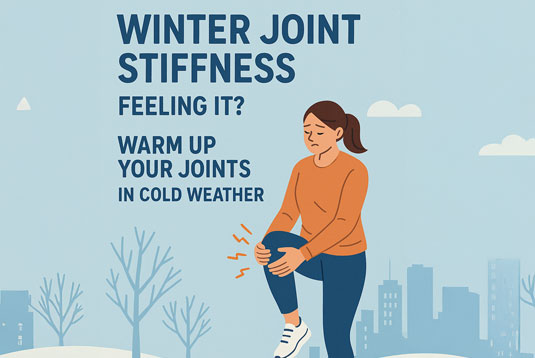
Even though Houston winters are milder than most, many patients still notice that their joints feel stiffer, achier, and less flexible during the colder months.
Whether you’re dealing with arthritis, an old injury, or general muscle tightness, seasonal joint stiffness can make daily activities and workouts more challenging.
The good news? With the right strategies, you can stay mobile, active, and comfortable all winter long.
Why Joints Feel Stiffer in Cold Weather
Several factors contribute to increased joint discomfort during the winter:
1. Lower temperatures tighten muscles and tendons.
Cold weather can cause tissues around the joints to contract, reducing flexibility and increasing stiffness. This is especially noticeable in the mornings or after long periods of inactivity.
2. Barometric pressure drops.
When pressure decreases before a cold front, joint tissues may swell slightly. For people with arthritis or past injuries, this can trigger discomfort or pain.
3. Less movement = more stiffness.
Shorter days and holiday schedules often mean less exercise. When joints aren’t moved regularly, lubricating fluid decreases and stiffness increases.
4. Mild dehydration in cooler weather.
People tend to drink less water during winter, but joints still need hydration to function smoothly.
How to Stay Mobile and Reduce Winter Joint Pain
1. Start Your Morning With Gentle Movement
Before jumping into your day, spend 5 - 8 minutes warming up your body. Easy options include:
- Arm circles
- Cat - cow mobility
- Hip flexor stretches
- Light marching in place
This warms muscles, increases blood flow, and reduces stiffness.
2. Stay Consistently Active
Even short bursts of movement can make a big difference. Try:
- 20–30 minute walks
- Swimming or water aerobics
- Light cycling
- Yoga or Pilates
Consistency is more important than intensity especially during colder months.
3. Use Heat Wisely
Applying heat before activity helps loosen muscles and joints. Warm showers, heating pads, and heated blankets can all help decrease morning stiffness or prepare your body for exercise.
4. Choose Anti-Inflammatory Foods
Winter comfort foods often increase inflammation. To support joint health, include:
- Leafy greens
- Berries
- Olive oil
- Salmon
- Nuts and seeds
- Turmeric or ginger
These foods help reduce swelling and improve mobility.
5. Hydrate Even When You’re Not Thirsty
Aim for 6–8 glasses of water a day. Staying hydrated helps maintain the fluid that cushions your joints.
6. Consider Non-Surgical Joint Pain Treatments
For persistent discomfort, CLS Health Orthopedics & Sports Medicine offers advanced non-surgical options, including:
- Shockwave therapy for chronic tendon and joint pain
- Ultrasound-guided injections
- PRP and regenerative medicine therapies
- Customized mobility and strengthening programs
These treatments can help reduce stiffness and restore function without the need for surgery.
When to See a Specialist
If joint pain interferes with your daily routine, worsens in cold weather, or lasts more than a few days, it’s time to seek expert care. Early treatment can prevent long-term joint damage and help you stay active through winter and beyond.
Stay mobile this winter. Schedule your appointment with Dr. Javier Rios MD at CLS Health Orthopedics & Sports Medicine today.
Dr. Javier Rios MD is Houston's Nonsurgical Orthopedic & Sports MD.


